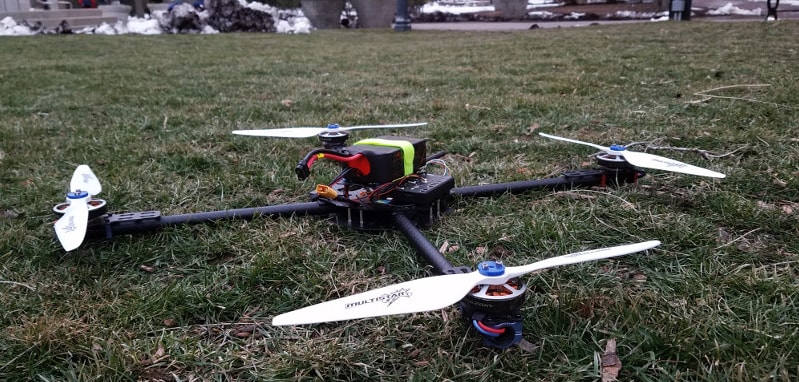
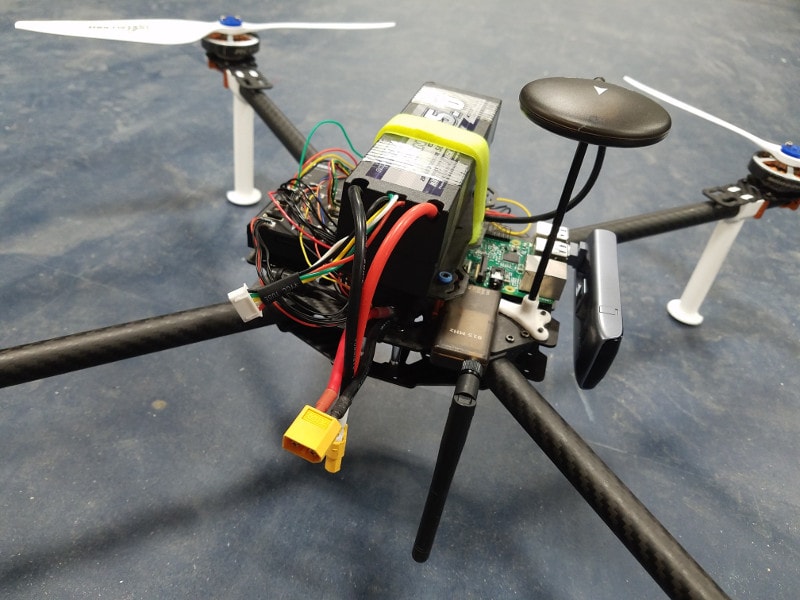
What started as a DIY project grew into a semester-long team effort to build an autonomous delivery drone. On top of building a drone that could carry packages up to 1 kg for 20 to 25 minutes, we had to write code that talked to the drone’s onboard flight controller, a REST API, and an easy-to-use web app. To talk to the drone in flight, we gave it an LTE antenna and a SIM card for internet access.
I built the server back-end and the website. The back-end was a Python Flask app running on AWS. The database stored each drone’s real-time position, velocity, altitude and battery voltage, and a separate process coordinated multiple drones, assigning deliveries based on how much battery each had left. The front-end had to work on phones and poll the server to show the drones’ positions live on a map.
We met with the university’s department of public safety several times to plan a live delivery demo. For safety, we had to fly over buildings as much as possible instead of point-to-point, so we added the ability to upload a waypoint path to each drone before takeoff. We ran out of time before we could hold the live demo, but we tested the full system several times in a safe area.
The full source is here, and the latest version of my web app and server code is here. We also made a short teaser video for the demo: