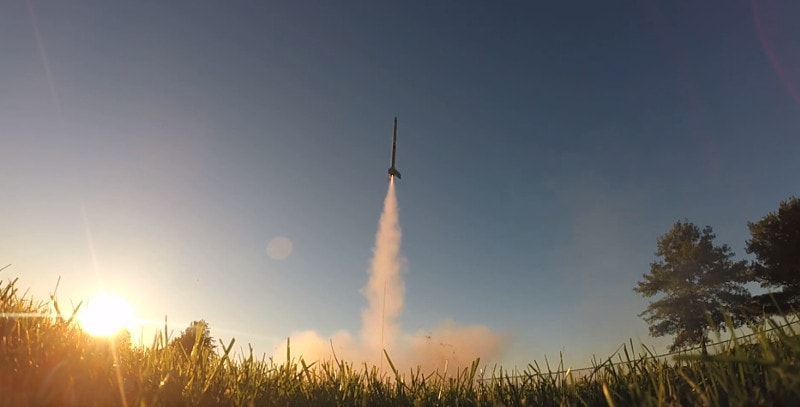
We wanted to make experimental rocketry easier to get into, so we shared the code and CAD for our flight computer, smart launchpad and rocket components. ORI had three parallel efforts:
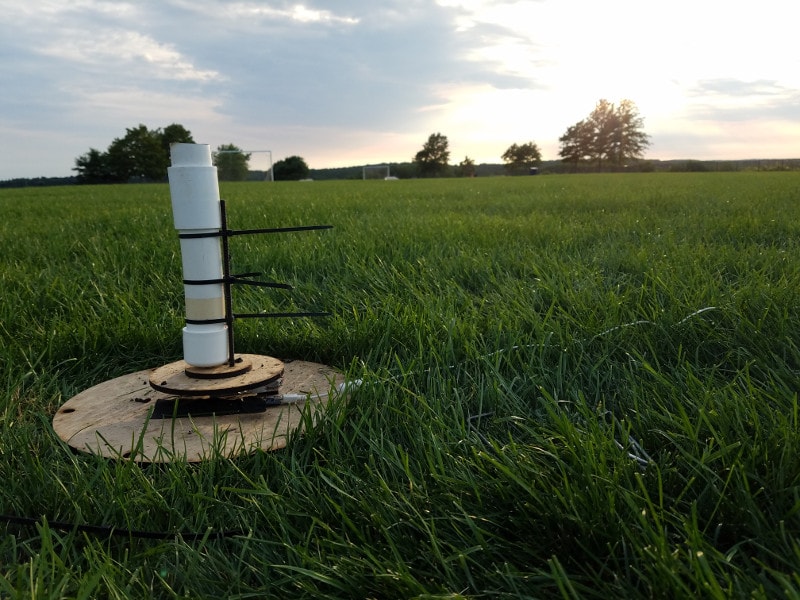
- Smart launchpad. Trigger a launch over WiFi and measure motor thrust curves (repo)
- Motors. Optimize rocket motor thrust curves by adjusting fuel mixtures (repo)
- Rocket flight computer. Measure real-time rocket position and control chute deployment (repo)
Carlson, the flight computer
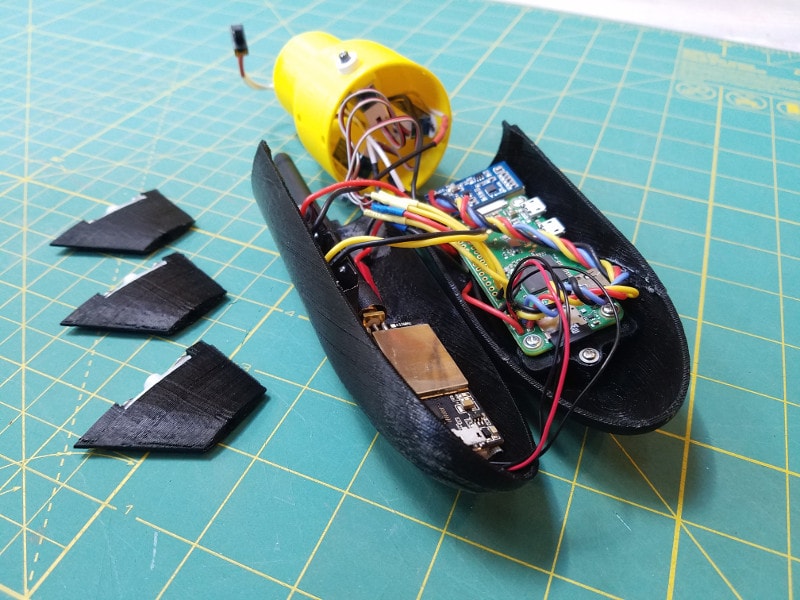
I led development of the rocket flight computer, lovingly nicknamed Carlson. Carlson runs on a Raspberry Pi Zero W and monitors the rocket’s orientation in real time during flight. It has a 10-DOF MPU9255 inertial measurement unit with an accelerometer, gyroscope, magnetometer and barometer, and a telemetry radio lets us talk to the rocket while it’s in the air. The ORI team flew Carlson on a bunch of launches, and the orientation data we collected let us build a real-time apogee detection algorithm.
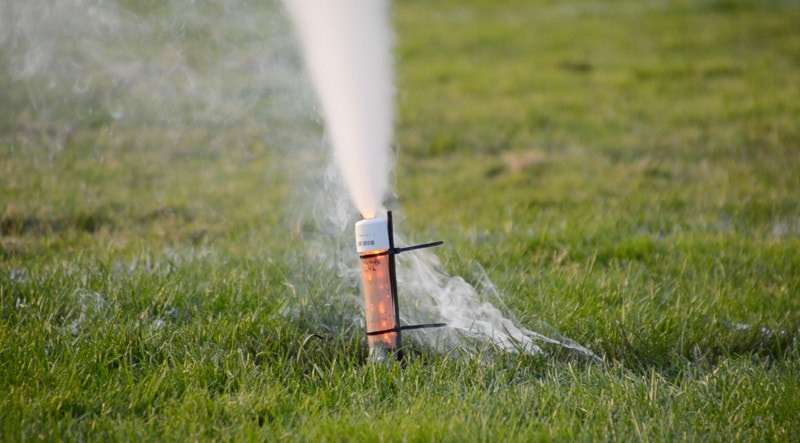
The algorithm first detects freefall (zero acceleration across all three axes) and then looks for more than 90 degrees of deviation from vertical. When both are true, meaning the rocket is falling back down, the Pi shorts a relay that heats some Nichrome wire, which ignites the blast cap and ejects the parachute. Here’s a video of the parachute being ejected.
In June 2018, as recipients of the NASA Rhode Island Space Grant, we gave a short talk at the RISG Symposium in Providence about Carlson, the smart launchpad and our motor testing. The slides are on Google Slides, and there are more photos and videos on our Instagram.