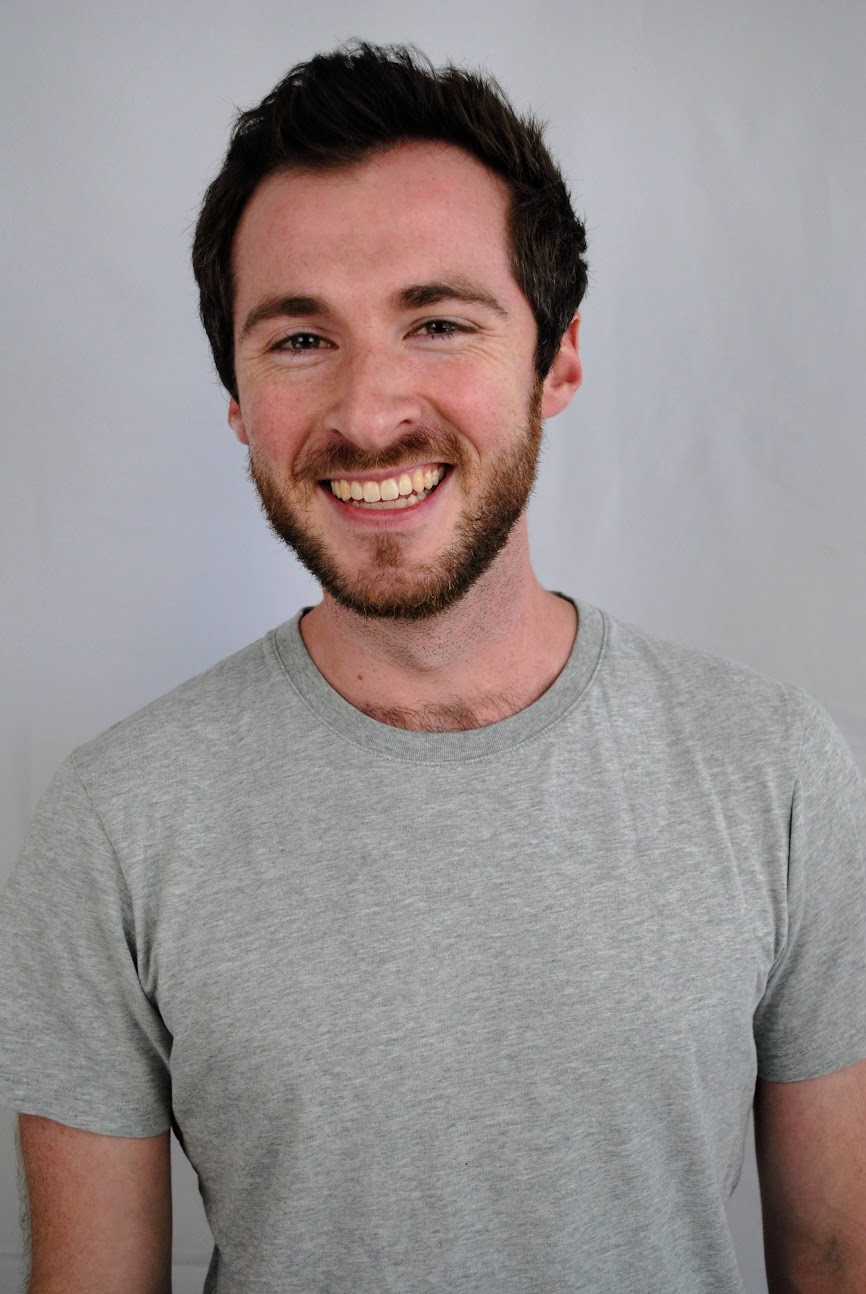
Benjamin Shanahan
Hi, I'm Ben. I co-founded Senra, where we build wiring for aerospace and defense companies.
These days I'm applying frontier AI and robotics to automate high-mix assembly at scale. Before Senra I wrote manufacturing software at SpaceX, and before that I studied neuroscience at Brown and worked on brain-computer interfaces.
Revision history
| Rev | Revisions |
|---|---|
| Mid 2026-nowAI and robotics at Senra CurrentIn mid-2026 I shifted my focus to applying AI and robotics to high-mix assembly. The goal is to give our technicians superpowers: vision for inspection, robots for the hardest assembly steps, and agents across our software. | |
| Early 2023-nowCo-founded Senra, built Amp Jordan Black and I started Senra in 2023. I spent the first three years building Amp, basically Warpdrive-lite for wire harness manufacturing. | |
| Mid 2022-early 2023Telemetry at SpaceX A stint on the system that records massive amounts of high-rate continuous data from engine tests, launches and satellites. | |
| Mid 2021-mid 2022Starlink factory On the Manufacturing Execution System team in the Starlink factory, building user terminals at rate. Between Starlink and rocket engines I saw both high-rate, low-complexity and low-rate, high-complexity production at scale. | |
| Late 2020-2023SpaceX, Warpdrive Moved to LA to join the Warpdrive team. Warpdrive is SpaceX's in-house Enterprise Resource Planning and Execution System, used to build rockets and satellites. | |
| 2018-2021NeuroPace Moved to the Bay Area. I built internal systems that took our research scientists' analyses into production and presented them to doctors, in support of new epilepsy therapies on NeuroPace's implanted medical device. | |
| 2016-2018BrainGate lab, Brown University After graduating I spent a year in the BrainGate lab doing brain-computer interface research. I built a real-time monitoring system for the BrainGate research cart and worked on FPGA hardware with a grad student. | |
| 2013-2018Side projects at Brown Drones, rockets and light shows, mostly built solo or with friends. See Lunadrop and the Open Rocketry Initiative. | |
| 2013-2017Neuroscience, Brown University Initial releaseSc.B. in neuroscience with honors, magna cum laude, 2017. |
About
NotesI built my first website in 2005, when I was ten. A few years later I got a LEGO Mindstorms kit for my birthday, and it started an obsession with building things that interact with the world. In high school my dad gave me an Arduino starter kit over the holidays, and I taught myself to solder, read schematics, and build simple circuits and robots. To me, building hardware and software is as creative as art or music, and some of my favorite projects mix them, like Audiolux, a light show that reacts to music in real time.
At Brown I studied neuroscience and found my way into brain-computer interface research in the BrainGate lab, where hardware, software and my degree all came together. I wrote my honors thesis there on detecting idle-state brain activity with machine learning classifiers, and graduated magna cum laude in 2017. I stayed on for a year after that. I built a real-time monitoring system for the research cart, and worked with a grad student to miniaturize the cart, shrinking its amplifiers and signal processing onto a single FPGA, which taught me to think in clock cycles. I also reverse-engineered the lab's recording software so our version could drop in for the cart, writing the same data format all of BrainGate's analysis was built on.
Next I moved to Silicon Valley to join NeuroPace, which makes an implanted device for epilepsy. Embedded with the research team, I built web-based visualization and treatment-suggestion tools that brought their machine learning research to doctors. Looking back, BrainGate and NeuroPace gave me an early start on the building blocks of today's AI: classifiers, neural nets, LSTMs, and t-SNE for making sense of high-dimensional neural data. Mid-pandemic I moved to LA to join SpaceX, where I worked on Warpdrive, on the manufacturing execution system (MES) that built Starlink user terminals and Wi-Fi routers at high rate, and briefly on telemetry systems that record continuous high-rate data from the whole Starlink fleet.
At SpaceX I met Jordan Black, and in 2023 we started Senra to fix the wire harness design, procurement, and quality problems SpaceX and countless other customers kept running into. We'd both built and used high- and low-rate manufacturing systems firsthand, and we knew the solution consisted of an end-to-end software platform and a smart factory built in tandem from the ground up. For the first three years I built our harness design tool and ERP/MES with the software team, which we later merged into one platform, Amp. Since mid-2026 I've been leading our frontier automation program, using robotics and AI to speed up the build for our technicians.
What drives me is understanding how things work and fit together. I love hard problems with no clear solution, and I like to stick with them until the pieces click. I've always been a 0-to-1 guy, and Senra is the best version of that I've found: a problem that matters to the whole industrial base, where the answer spans process, people, and a lot of technology stitched together at scale. Most of my free time goes into Senra too. Beyond that I make electronic music and art, climb, play volleyball, run, hike, bike, cook when I have time, go on walks with my wife, and pick up the occasional hobby project.